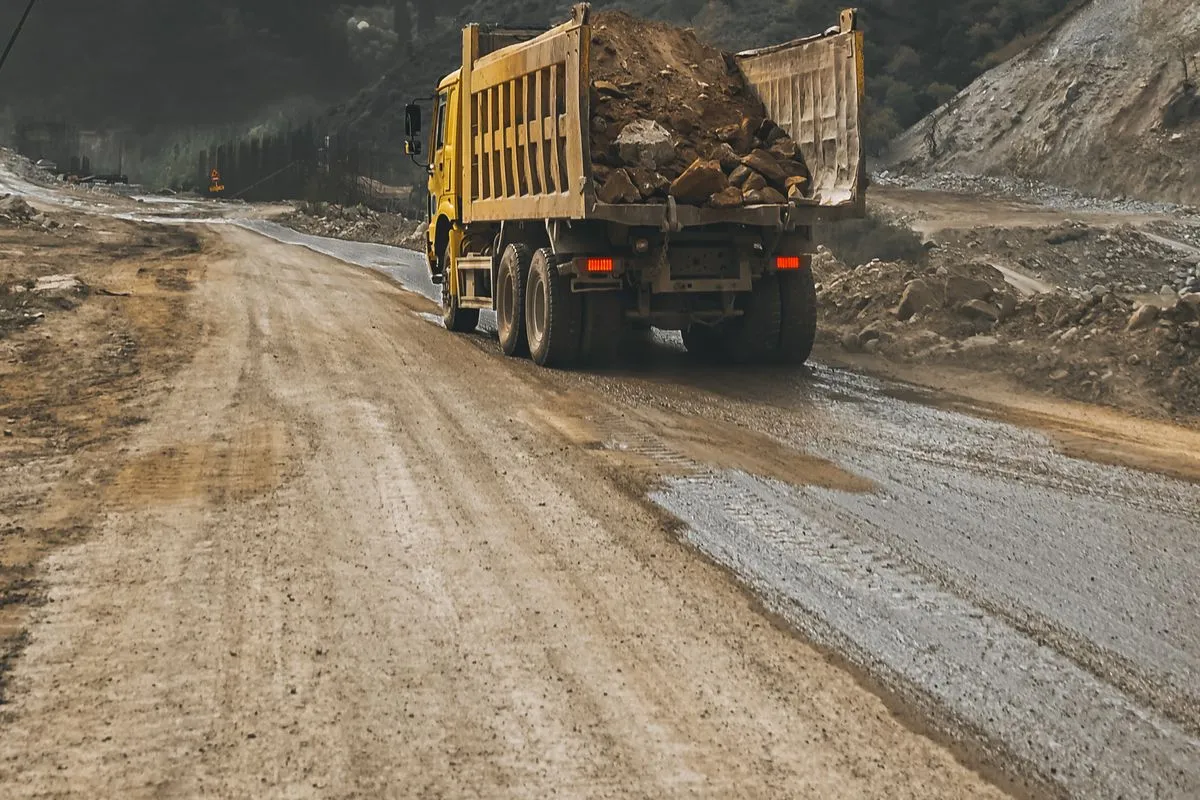
Alley access decides the truck size on most city jobs. We load spoil as we dig and bring back stone or clean fill matched to the work.
Hauling in Baltimore is shaped by alleys, narrow streets and parking. Many rowhouse yards can only be reached from an alley too narrow for a big dump truck, so we use smaller trucks, plan loads around trash day and keep the alley open as much as we can. Spoil is usually loaded as we dig, because there is rarely room to stockpile it.
What comes out varies: micaceous soil and boulders on Piedmont lots, sand and clay on Coastal Plain lots, plus brick, concrete and ash from old fill. What goes back is matched to the job: crushed stone under slabs and drives, drain stone behind walls and basements, clean fill for low spots and voids, and screened topsoil for lawn. Fill of unknown origin is turned away.
Fill is placed in thin layers and compacted so it does not settle, and on lots in the floodplain or Critical Area, adding fill can need a permit. We check that before ordering trucks. At the end of each day we clean the street and alley and keep sediment out of the storm drains. A full truck is never left idling in a narrow alley longer than it has to be.
Hauling & fill dirt in Baltimore: common questions
Can you haul dirt from a rowhouse yard through the alley?
Usually, with a smaller truck or machine. We check the alley width and any low wires first.
Can I add fill to raise my waterfront yard?
Maybe. Fill in the floodplain or the Critical Area can need a permit, so we check before bringing it in.
What do you do with old brick and concrete?
We separate it and take it to a recycler or approved disposal site.
How it works
- Free estimate: Call, text or book online. We walk the site with you.
- Written quote: Scope, equipment and price in writing.
- Utility locate & plan: We have utilities marked and plan access, haul-off and erosion control.
- Dig, grade & clean up: We complete the work, grade the site and haul away spoil.